Fatigue and training load
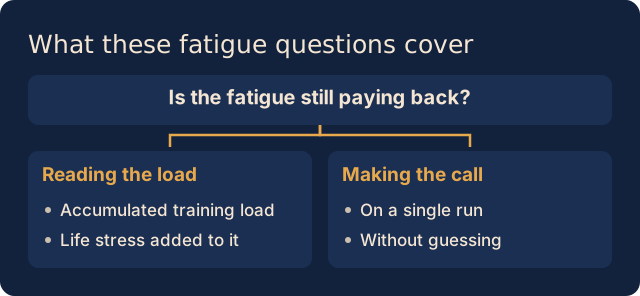
Training load is the total stress your running puts on your body, from distance and intensity, which recovery from sleep and rest has to absorb. Fatigue is the point of training until it stops paying back. These questions cover how to read accumulated load, how life stress adds to it, and how to make the call on a single run without guessing.
-
Acute:chronic workload ratio, in plain English
How the acute:chronic workload ratio is calculated, the range studies cite, why researchers debate it, and what to check in your own training data.
-
Am I overtraining, or just tired?
How to tell training fatigue from overtraining by reading resting heart rate, pace at effort, sleep and mood as a trend, and when to get a professional read.
-
Does work stress count as training load?
Why a stressful week at work adds to your training load, which signals to check against your own baseline, and how to weigh today's session against them.
-
What does a deload week do, and do I need one?
What a deload week does to fatigue and fitness, the signals that point to needing one, how much volume to cut, and how long and how often to deload.
-
Skip or shorten the workout after bad sleep?
How much one bad night of sleep changes a hard session, when a shortened version keeps its value, and which signs point to skipping it instead.
-
Niggle or injury? How to decide before you run
Four questions that separate a passing niggle from an injury before you run, what the answers point to, and the signs that mean seeing a physio or doctor.
-
Should I stop a run that's going wrong?
How to tell a stop-now signal from ordinary training stress mid-run, when finishing a hard session is worth it, and what a cut-short run means for the week.